
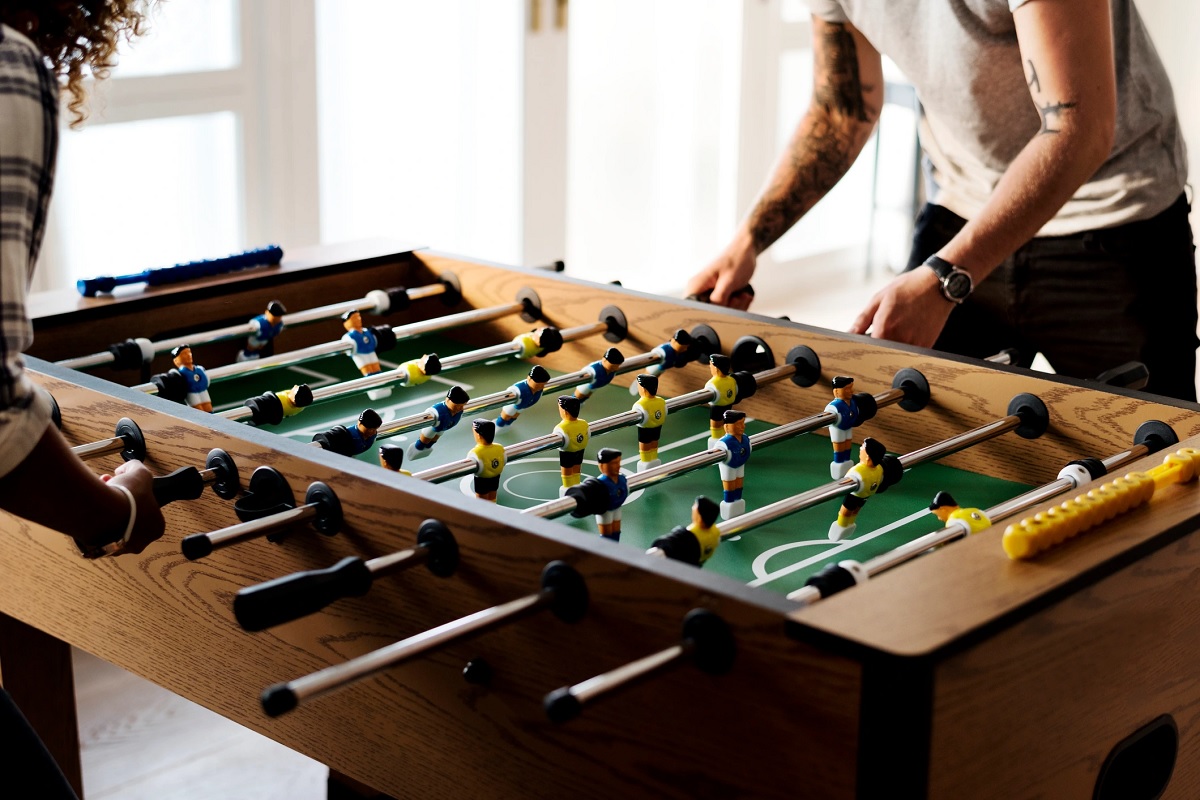
Almost every games room falls at the first hurdle. The equipment is decided on and shoehorned in wherever will fit, before anybody even considers throwing a dart. But a real indoor sports den works the other way around – the room is the system, and the equipment naturally slots in around it. The difference shows immediately.
Walk into a room that was designed around the games and you feel it – there’s space to move, space to breathe, and everything seems to belong exactly where it is. Walk into one that wasn’t, and you’re stepping over cables and apologising for your backswing.
Establish Your Zones Before Anything Else
A well-designed games room is not just a vast open space. It’s made up of different sections that intermingle without clashing. The key is to apply a zone-out approach – one section for dynamic gaming, one for viewing, and one for light snacks.
You start by clearing the dynamic gaming section with enough elbow room. You want about 1.5 to 2 meters behind each shot in pool to avoid collisions and that holds even if you’re playing a shot softer than usual. An installation for darts in your room also needs its own empty lane with the throw line kept clear and staying at the right distance. Nothing in the gaming spaces should touch that line. You’ll be surprised by the amount of elbow room activities on the floor need when people are milling around the room.
The viewing zone needs a good line of sight to the action, not just the screen. It starts with the right height of seating. If you want guests to enjoy games in front of the TV for long stretches, it doesn’t do to have them crane their necks at an uncomfortable angle for long. Pick chairs or bar stools tall enough for clear viewing of the game zone.
The final corner is a wet bar or refreshment station. Once you have a self-contained zone offering water, drinks, or snacks, you don’t have gamers leaving the room every time they get parched.
Pick One Hero Piece And Build Outward
The best games room always has a main attraction, the most important ‘anchor’ item in the room. Whether this is a full-size billiards table, a professional-grade arcade cabinet or perhaps even a dart setup, it’s this main item that will determine the layout of the room and to secure this, you must consider the clearance first, the aesthetics second.
After you have chosen this perfect item, the other less important items can easily be placed around it. For instance, if you are planning to include a poker table, then it can easily be positioned near the bar. A console gaming setup works perfectly in the spectating corner of the room.
A dart board is also a fantastic option for an epic games room – but choose wisely as the quality of the board will directly impact your overall playing experience. Enthusiasts who want dart boards adelaide will quickly notice the difference between an ordinary budget board that causes deflections as the darts hit the wires, and a tournament-grade sisal board where the darts are effortlessly accepted into the board after every throw. So don’t be cheap on the one item that everyone in your games room will come into contact with the most.
Lighting And Acoustics Aren’t Optional
This is the biggest dividing line between what an amateur could set up and what a professional can deliver.
A layered lighting scheme will see dimmable overhead LEDs provide the overall vibe, while dedicated task lighting zeroes in on the precision areas. A dartboard with bad overhead lighting means shadows across the scoring segments. A billiards table without a centred pendant light makes reading angles difficult. Smart integration – voice-controlled scenes that switch the room between “game mode” and “viewing mode” – takes this even further, letting the room react to whatever’s happening without you reaching for the switches.
Acoustics matter more than they’ll get credit for. Hard floors and bare walls turn a games room into an echo chamber the moment there’s crowd noise or a speaker running. Multi-purpose flooring – rubber matting or low-pile carpet – absorbs impact sound and helps with safety on active play areas. Acoustic treatment panels on shared walls stop your or your kids’ fun from spilling into bedrooms or a quiet living room.
Climate control doesn’t get considered at all. You probably didn’t know, but both solid wood pool tables and electronic dartboards react to temperature and humidity. If it’s hot in summer and cool in winter, your expensive equipment suffers. A dedicated unit for the room is money well spent.
Build For What You Don’t Own Yet
The global home entertainment market looks to continue its 8.2% growth trajectory through 2030 (Grand View Research), with homeowners spending more on pro-grade gear vs. continuous mediocrity replacement. So, to best do that, let’s tend to those essentials along the way.
Cable management is a given, but adding in conduit within the walls to the entertainment system and extra power outlets gives you breathing room for that arcade machine or additional screens.
Jersey mounts and memorabilia display shelves behind the door; include them where the open wall isn’t projected for bulky equipment clearance. Make a statement of your game-worn treasures and limited-edition pops.
And, of course, the ultra-essentials if you’re doing the wall-mount television, backboard protection and wall shields to support the billiards space.
The Room That Works Year-Round
A game room that works in January and July, with two people or twelve, is one that needs to be built and not gathered together. Nail the zones, select gear that won’t wilt under real-life play, conquer the lighting and acoustics, and the rest is easy.
The great game rooms don’t feel like a guest bedroom with a foosball table. They feel like a place that people would happily spend all Saturday.
