
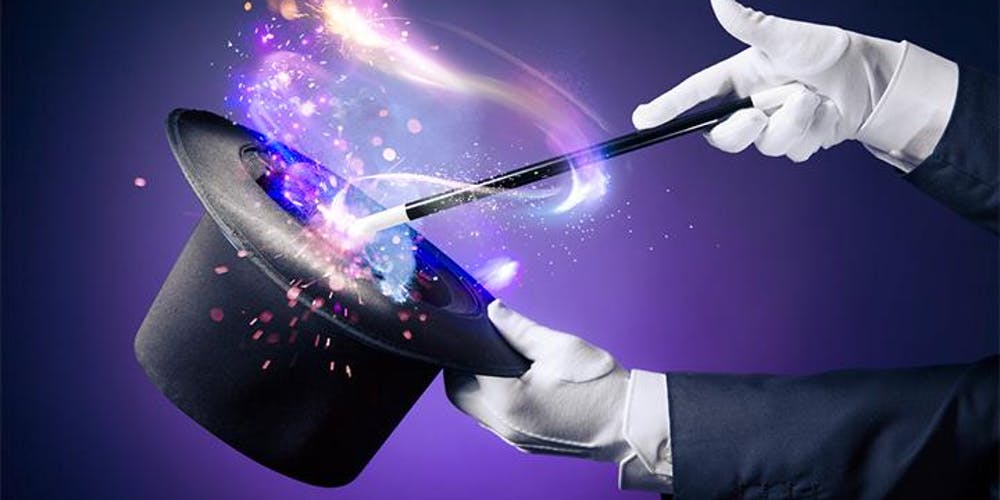
In the gleaming city-state where tradition meets innovation, the rise of the magician Singapore phenomenon represents far more than mere entertainment—it embodies a fascinating intersection of ancient art forms and contemporary psychological needs in one of the world’s most rational, orderly societies.
The Anthropology of Wonder
Throughout human evolutionary history, magic has served as a mediating force between the explicable and inexplicable. What began as shamanic rituals designed to make sense of natural phenomena has evolved into sophisticated performances that deliberately challenge our perception of reality. In Singapore’s hyper-modern context, this ancient human need for wonder finds unique expression.
The contemporary magician creates a controlled environment where impossibility becomes momentarily possible—a psychological respite that is particularly valuable in a society structured around pragmatism, efficiency and technological rationality. This juxtaposition between Singapore’s rational order and the deliberate subversion of natural laws through illusion creates a cognitive tension that audiences find deeply satisfying.
The Neuroscience of Deception
The success of magical performances relies on exploiting specific cognitive vulnerabilities that have persisted throughout human evolution. Consider these fundamental mechanisms that every successful illusion leverages:
· Attentional misdirection capitalises on our limited processing capacity
· Change blindness exploits our inability to track multiple changing elements
· Pattern recognition errors occur when our brains construct false causality
· Memory limitations allow for retrospective rewriting of observed events
· Sensory illusions manipulate how our brain interprets incoming information
“Singapore audiences demonstrate a unique analytical approach to magic. They seek to understand the methodology while simultaneously desiring to be deceived,” notes a prominent performance arts researcher. This cognitive dissonance—wanting both to know and not know—creates a distinctive performance environment.
Beyond Entertainment: Magic as Social Commentary
The illusionist’s art extends far beyond mere entertainment, functioning as a subtle critique of consensus reality and social conventions. In Singapore’s context, where order and regulation feature prominently, magical performances create temporary spaces where established rules appear to be suspended.
This suspension serves a psychological function beyond momentary amazement. It temporarily liberates the audience from the constraints of a highly structured society, offering glimpses into alternate possibilities. The controlled subversion of reality in a magical performance provides a sanctioned opportunity to question assumptions—an experience particularly valuable in environments where conformity is highly valued.
The Digital Transformation of Ancient Arts
We stand at a fascinating inflection point where traditional sleight-of-hand and digital technologies increasingly converge. Social media platforms have transformed how magical performances are consumed, shared and interpreted, while simultaneously creating new challenges for performers.
“The proliferation of performance videos on social media has significantly altered the Singapore magic scene, necessitating continuous innovation from performers who now compete not only with local peers but with global content,” observes a cultural trends analyst.
This technological dimension introduces unprecedented elements to the ancient art:
· Virtual performances enabling impossibilities beyond physical constraints
· Augmented reality illusions blending digital and physical environments
· Social media scrutiny demanding heightened technical perfection
· Global knowledge sharing accelerating technical innovation
· Digital documentation requiring continuous evolution of methods
Cultural Adaptation and Hybridisation
Singapore’s unique position as a cultural crossroads creates a magical performance landscape unlike any other. Illusions incorporate elements from Chinese, Malay, Indian and Western traditions, creating hybrid forms that reflect the nation’s multicultural identity.
This adaptation manifests in several distinctive characteristics:
· Integration of traditional cultural symbols and narratives
· Multilingual patter reflecting linguistic diversity
· Performance venues ranging from luxury hotels to hawker centres
· Audience expectations shaped by multiple cultural traditions
· Thematic elements addressing uniquely Singaporean experiences
“The most successful magical performances in Singapore incorporate culturally resonant elements that connect with our shared experiences while transcending ethnic boundaries,” notes an arts council publication. This cultural synthesis creates performances that are simultaneously universal and distinctly local.
The Economics of Illusion
The business of wonder in Singapore operates across a fascinating spectrum—from high-end corporate entertainment to public performances in community spaces. This diversity reflects both economic stratification and a democratic approach to wonder, making magical experiences accessible across socioeconomic boundaries.
Corporate events represent the most lucrative segment, where illusions serve not merely as entertainment but as metaphorical vehicles for organisational messaging. Meanwhile, community performances fulfill different functions, strengthening social bonds and preserving traditional art forms that might otherwise disappear in a rapidly modernising society.
The Future of Enchantment
As Singapore continues its trajectory as a global technological hub, the role of magical performance paradoxically grows rather than diminishes. The more our daily lives become mediated through digital interfaces and artificial intelligence, the more valuable becomes the raw, immediate experience of wonder that skilled illusionists provide.
This counter-intuitive relationship highlights a fundamental aspect of human psychology: our need for mystery persists regardless of technological advancement. Indeed, one might argue that this need intensifies precisely because of our increasing ability to explain the natural world through scientific frameworks.
Conclusion
The seemingly frivolous practice of magical performance reveals itself, upon deeper examination, to be a sophisticated psychological and cultural phenomenon that fulfills essential human needs. In Singapore’s context, these performances create temporary autonomous zones where imagination transcends the constraints of physical laws and social conventions.
As we progress further into an era dominated by artificial intelligence, virtual reality, and increasingly blurred boundaries between the real and the simulated, the role of the live performer who deliberately manipulates our perception gains rather than loses relevance. The future promises not the obsolescence of magic but its evolution into ever more sophisticated forms, ensuring that wonder remains accessible to future generations seeking the unique psychological experience provided by a skilled magician Singapore.
